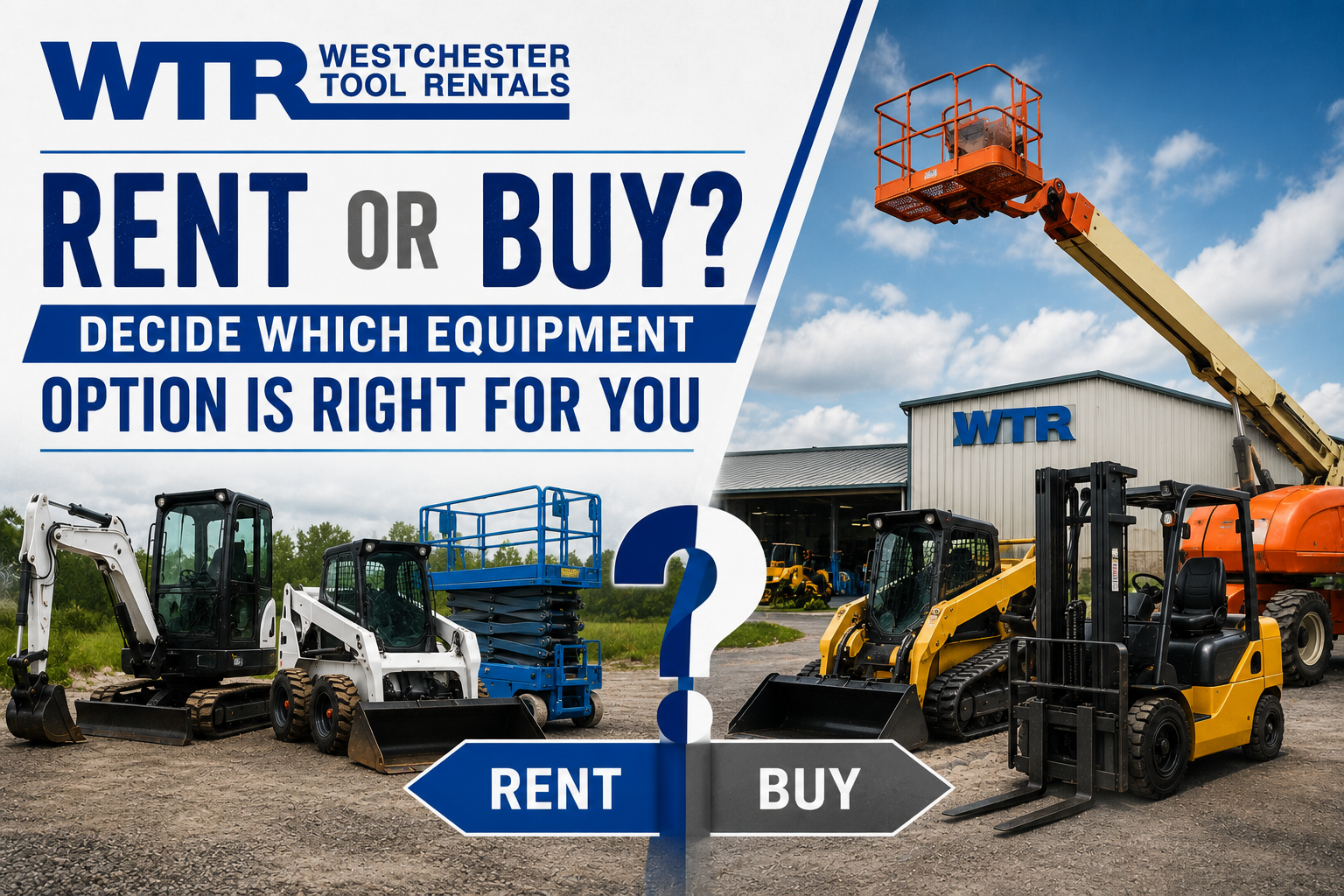
One of the biggest decisions contractors, landscapers, business owners, and even homeowners face is whether to rent or buy equipment. While owning equipment can make sense for some businesses, renting often provides greater flexibility, lower costs, and access to the latest machines without the long-term commitment.
At Westchester Tool Rentals, we help customers choose the option that best fits their project, budget, and long-term goals. Understanding the advantages of each can help you make a smarter investment.
When Renting Equipment Makes the Most Sense
For many projects, renting is the most economical and practical solution. Renting is ideal when you:
- Only need equipment for a short-term project
- Use specialized equipment a few times each year
- Want to avoid large upfront investments
- Need additional equipment during busy seasons
- Want access to newer equipment and technology
- Don’t have storage space
Whether you’re tackling a weekend landscaping project or expanding your construction fleet for a large commercial job, renting gives you flexibility without ownership costs.Benefits of Renting Equipment
Choosing to rent equipment offers several advantages.
- Lower Upfront Costs: Avoid spending tens of thousands of dollars on equipment you’ll only use occasionally.
- No Maintenance Costs: Repairs, servicing, inspections, and routine maintenance are handled by the rental company.
- No Storage Requirements: Large equipment requires secure storage and transportation. Renting eliminates those concerns.
- Access to Newer Equipment: Rental fleets are regularly updated, giving you access to dependable, professionally maintained machines.
- Flexible Rental Terms: Rent equipment by the day, weekend, week, or month based on your project schedule.
When Buying Equipment May Be the Better Investment
Purchasing equipment can be beneficial when you use the same machine regularly. Buying may make sense if you:
- Use equipment every day
- Have multiple ongoing projects
- Want to build company assets
- Have in-house maintenance capabilities
- Have long-term storage available
For businesses with consistent equipment needs, ownership can provide long-term value.
Equipment That’s Often Better to Rent
Some equipment is used only occasionally, making it ideal for rental.
Common rental equipment includes:
- Mini Excavators:Perfect for digging foundations, trenching, grading, and drainage work.
- Skid Steers: One machine with multiple attachments for landscaping, grading, demolition, and material handling.
- Boom Lifts: Ideal for exterior construction, roofing, tree work, and commercial maintenance.
- Forklifts: Excellent for warehouses, construction sites, and moving heavy materials.
- Compaction Equipment: Essential for patios, driveways, asphalt repairs, utility trenches, and site preparation. Renting these machines allows you to access specialized equipment only when you need it.
Hidden Costs of Equipment Ownership
Many buyers focus only on the purchase price. However, ownership also includes:
- Maintenance
- Repairs
- Fuel
- Insurance
- Registration
- Transportation
- Storage
- Depreciation
- Financing costs
These expenses can significantly increase the true cost of ownership over time.
Questions to Ask Before Deciding to Rent or Buy Equipment
Before making your decision, ask yourself:
✔ How often will I use this equipment?
✔ How long will I need it?
✔ Do I have secure storage?
✔ Can I perform maintenance and repairs?
✔ Will technology change before I recover my investment?
✔ Is my cash better invested elsewhere?
Answering these questions can help determine whether renting or buying is the smarter financial choice.