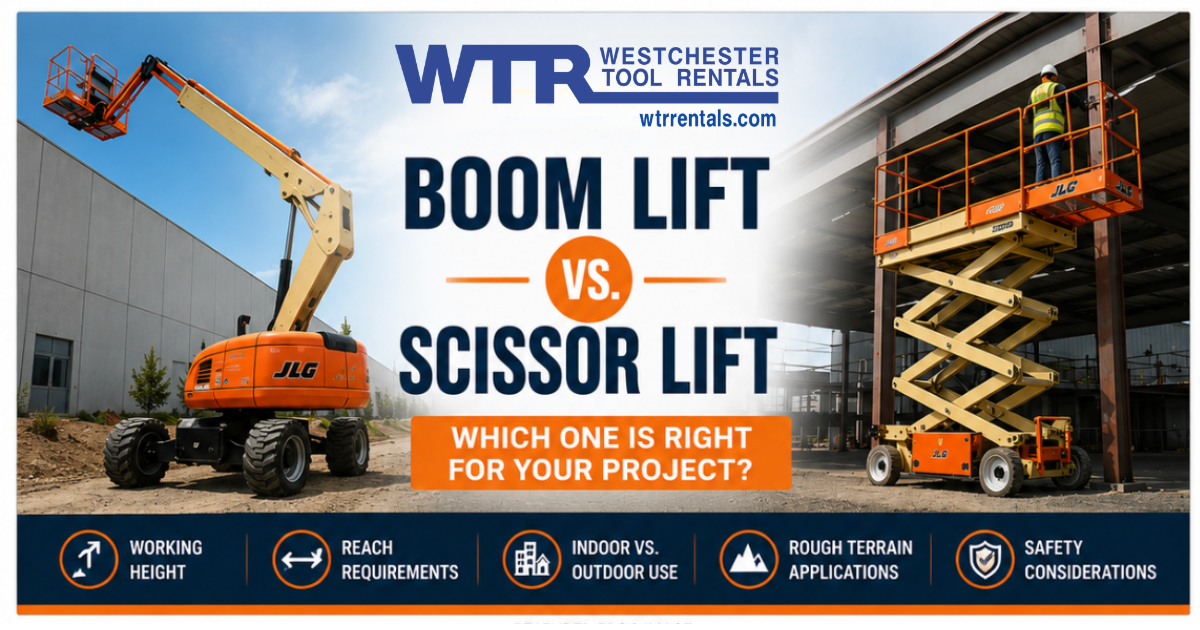
Boom Lift vs Scissor Lift is one of the most common questions contractors ask when planning a project. Choosing the right aerial lift can make your project safer, more efficient, and more cost-effective. While both lifts provide safe access to elevated work areas, they serve very different purposes. Understanding the differences will help you select the right equipment for your job, improve productivity, and avoid costly delays.
“Should I rent a boom lift or a scissor lift?”
While both are designed to safely elevate workers, each serves a very different purpose. Understanding the differences can help you choose the right equipment for your job and avoid unnecessary delays.
Boom Lift vs Scissor Lift: What’s the Difference?
The biggest difference comes down to how the platform moves.
A boom lift extends both vertically and horizontally, allowing operators to reach up, over, and around obstacles.
A scissor lift moves only straight up and down, providing a larger, more stable work platform for tasks directly overhead.
Knowing your project’s reach requirements is the first step in choosing the right lift.
Boom Lift vs Scissor Lift: When Should You Choose a Boom Lift?
Boom lifts are ideal for projects where obstacles prevent direct access or when workers need to reach elevated areas from a distance.
They’re commonly used for:
- Tree trimming
- Building maintenance
- Exterior painting
- Roofing
- Sign installation
- Utility work
- Commercial construction
- Window replacement
Because the boom arm extends outward, operators can safely reach locations that ladders and scaffolding simply can’t access.
Benefits of Renting a Boom Lift
- Excellent horizontal reach
- Greater working height
- Access over obstacles
- Ideal for outdoor construction
- Available in rough terrain models
- Increased jobsite flexibility
Boom Lift vs Scissor Lift: When Should You Choose a Scissor Lift?
Scissor lifts are designed for projects where workers need to move straight up while carrying tools and materials. Their spacious platforms make them perfect for jobs requiring multiple workers.
Popular applications include:
- Warehouse maintenance
- Electrical work
- HVAC installation
- Indoor construction
- Ceiling repairs
- Lighting installation
- Painting
- Retail renovations
Because of their stability, scissor lifts are often the preferred choice for indoor projects.
Benefits of Renting a Scissor Lift
- Larger work platform
- Higher weight capacity
- Excellent stability
- Ideal for flat surfaces
- Easy operation
- Perfect for indoor jobs
Boom Lift vs Scissor Lift: Comparing Working Height
Boom Lift Working Height
Before renting any aerial lift, determine the actual working height required.
Remember:
Platform height is not the same as working height.
Working height includes the operator’s reach above the platform.
For example:
- A 26-foot scissor lift typically provides approximately 32 feet of working height.
- Boom lifts are available with significantly greater working heights for larger commercial projects.
Choosing equipment with the proper reach helps improve productivity while maintaining safety.
Boom Lift vs Scissor Lift for Indoor vs. Outdoor Projects
One of the easiest ways to narrow your decision is by considering where you’ll be working.
When to Use a Scissor Lift Indoors
Scissor lifts are often the better choice because they:
- Fit through standard doorways
- Operate quietly
- Leave fewer tire marks
- Work well on smooth concrete floors
- Offer stable platforms for extended tasks
Typical indoor jobs include:
- Warehouses
- Schools
- Churches
- Retail stores
- Manufacturing facilities
- Office buildings
When to Use a Boom Lift Outdoors
Boom lifts typically excel outdoors because they:
- Navigate uneven terrain
- Reach over buildings and landscaping
- Access elevated exterior work
- Handle larger construction sites
Common outdoor applications include:
- Commercial construction
- Facility maintenance
- Stadiums
- Parks
- Apartment complexes
- Industrial facilities
Boom Lift vs Scissor Lift for Rough Terrain Applications
Choosing the Right Lift for Uneven Terrain
Not every job site has smooth pavement. Construction sites often feature:
- Dirt
- Gravel
- Mud
- Uneven ground
- Slopes
For these environments, rough terrain boom lifts provide better traction and stability.
Many rough terrain models include:
- Four-wheel drive
- Oscillating axles
- Foam-filled tires
- Increased ground clearance
Choosing equipment built for the terrain improves both safety and productivity.
Boom Lift vs Scissor Lift Safety Considerations
Whether renting a boom lift or a scissor lift, proper operation is essential. Always remember to:
- Inspect equipment before use
- Follow manufacturer guidelines
- Wear required fall protection
- Never exceed platform capacity
- Maintain safe distances from power lines
- Operate only on appropriate surfaces
- Complete proper operator training
At Westchester Tool Rentals, our knowledgeable team can help ensure you choose the right equipment for your project and understand safe operating practices before you leave the yard.
Boom Lift vs Scissor Lift: Which One Should You Rent?
Choose a Boom Lift if you need:
- Horizontal reach
- Outdoor access
- Rough terrain capability
- Greater working heights
- To reach over obstacles
Choose a Scissor Lift if you need:
- Straight vertical access
- Indoor operation
- Large platform space
- Higher platform capacity
- Stable work positioning
Need Help Choosing Between a Boom Lift vs Scissor Lift?
If you’re still deciding between a boom lift vs scissor lift, our experienced team can help you choose the right aerial equipment based on your project requirements.
Our experienced team will help you select the best equipment based on your working height, terrain, jobsite conditions, and project requirements.
Whether you need a boom lift for exterior construction or a scissor lift for indoor maintenance, Westchester Tool Rentals has dependable equipment ready to help you work safely and efficiently.
Contact us today to reserve your aerial lift and keep your project moving.